Hang on. Maybe this wasn’t such a good idea after all.
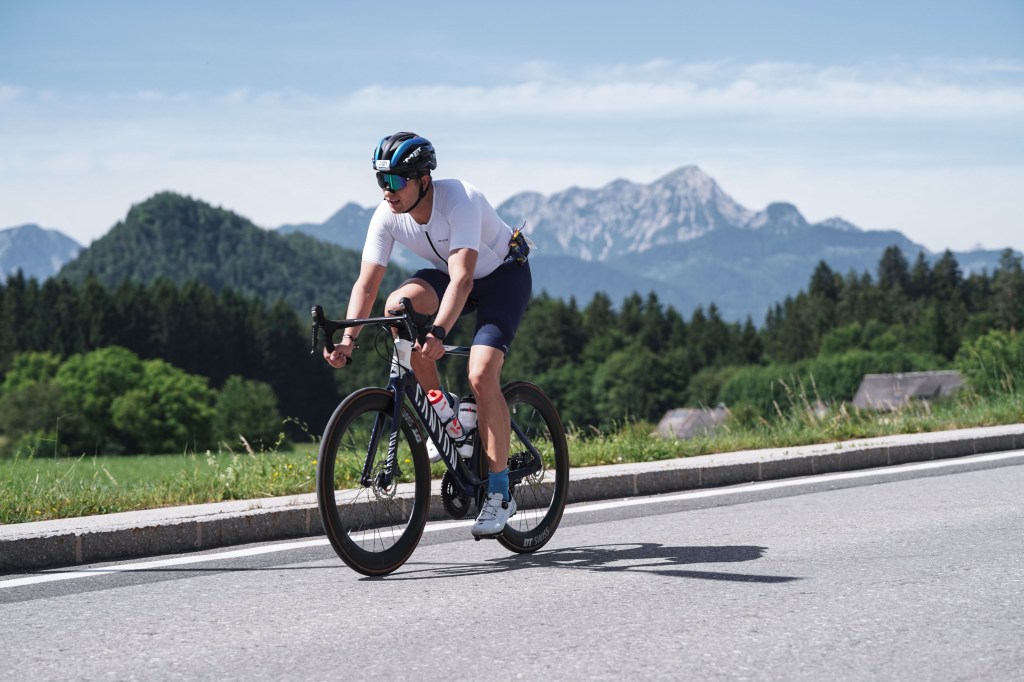
It’s a thought that most people who decide to enter an Ironman triathlon will have at some point. For me, it came it came around the midway point of the 180km bike ride through picturesque Austrian countryside in June this year. Everything was going to plan, until it wasn’t. To put it not at all over-dramatically, it felt like the world was falling apart.
Why are you (still) going on and on about Ironman, you’d be well within your rights to ask. This is, after all, a site about content writing and communications. But you can see where it’s going. The much-maligned ‘here is what event X taught me about B2B sales’ post is maligned for a reason. But there’s a reason why people are so quick to draw parallels between sporting endeavours and business and life in general. It’s because there are lots of them.
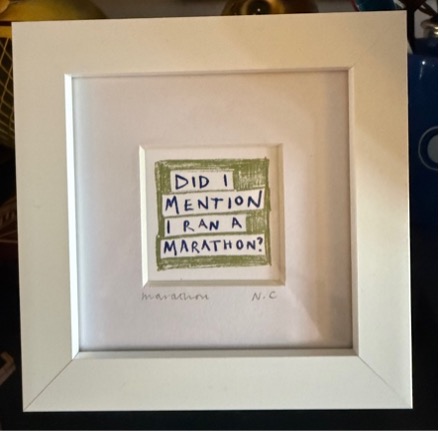
Let’s go back to beginning. The hardest part of the Ironman isn’t actually the training, the investment, of even the day itself – it’s of course making it your entire personality for the duration (and beyond). It’s the effort required to wedge it into every conversation or interaction, then feign exasperation when the person on the other side (a) doesn’t know the distances to the correct level of detail (3.8km swim, 180km cycle, 42km run – yes, a marathon) and (b) doesn’t quite grasp what’s possessed you to do it (does anyone?).
It’s remarkable in a way that my ‘hang on’ moment didn’t come sooner. Perhaps I just hadn’t been training intensely enough. Pre-race preparation had gone well, I’d slept and eaten well, and the swim had gone, well, swimmingly. It’s hard to say whether the moment arrives due to the psychological impact of a two-lap course, the impact of the heat (and then rain!), the stress of executing a nutrition plan for so long, the boredom of simply cycling on your own for so long, or in all likelihood, a bit of everything. Adapting is hard. Everything I’d learned during training, every aspect of my data-driven plan, all of that insight, felt insignificant.
In sport, when you’re striving for ‘success’ – however it is measured – it rarely comes from following a plan blindly, no matter how data-driven and evidence-based it is. It comes from knowing when to lean on insight, and when to trust your instincts. I needed to rely on instinct to get over the line in Austria (don’t worry, I did, otherwise I absolutely wouldn’t be writing about it). I also needed to recognise that I couldn’t do everything alone (yes, I know triathlon is an individual sport, but stick with me).
Insight or instinct – how do you know when to trust each? I’m a scientist and researcher by trade, so I’ve always known the value in being data-driven, even earning the title ‘Data Dan’ at my first job (it took me years to shake off). I was analysing tech and telecoms market data at work and doing other forms of data management in my spare time via endurance sport. With a plethora of performance metrics at my fingertips, I could develop and refine strategies based on previous experience and evidence. I could monitor performance and adjust my approach accordingly, making decisions based on what the numbers told me. Today, AI-based running coaches are a dime a dozen – think Runna (now part of Strava) and Coopah. I can recall being a member of the Accenture Triathlon Club while the firm was working on the Athlete Genome, an AI-driven platform developed with British Triathlon to integrate physical performance data with psychological and cognitive insights. Business isn’t dissimilar. Organisations invest heavily in market research, customer insight, performance metrics, and analytics – seeking to understand what’s happening, why it is happening, and what they should do next.
It’s always been my view that data can inform a decision, but it can’t make the decision for me.
It’s a view that hasn’t changed much over the years, from analysing Nokia’s market and competitor landscape and running my first marathon, to going freelance and my first full-distance Ironman. When my carefully constructed pacing plan fell apart in Austria, there were no data-driven insights to account for this. What do you do when your body just isn’t responding as expected? When the weather intervenes? When your nutrition plan crumbles? You have to make a judgement call. At work, you can spend months running models, sizing market opportunities, and so on. But when a proverbial spanner enters the works, at some point you have to make the decision yourself.
Too often, people over-index in one of the two – insight or instinct. In every company, there will be someone who obsesses over data like a religious doctrine, just as there will be someone who ‘wings it’ in a client meeting because they think they know best. At every triathlon there will be someone who is so wedded to the data they forget to listen to their body, and someone who is so unprepared they ‘hit the wall’ too early. The best results come when insight and instinct inform each other – helping you to know your limits, develop an ability to adapt, and build resilience.
Targets matter, but only to a point.
It’s easy to obsess over targets when it comes to big endurance events – a particular time, pace, or a personal best. But things rarely go to plan, of course. There are times when you need to push more, or ease off, or just abandon the original plan all together. In business, ambition is crucial but so is understanding what is realistically achievable. Strategy is important, but so is being prepared to change it. Measuring performance is important, but so is understanding the context behind the numbers, as progress is rarely linear. Knowing when to change direction is as important as knowing where you’re going.
The final parallel? Community.
Individual achievements are rarely individual efforts. But community isn’t always associated strongly with the ‘cut and thrust’ of business life. According to a recent British social attitudes survey, reported in The Times, job satisfaction has fallen to its lowest level on record and Britons are more reluctant to work harder to help their employer succeed. Sometimes that’s the case, and sometimes it isn’t, in my experience. I’ve worked in some tightly-knit, brilliant teams, and some disparate, rubbish ones (and tightly-knit, rubbish ones, for that matter). But since going freelance this year, community is something I’ve leaned on heavily – for support, advice, and motivation in tricky times. Working for yourself is a bit like training for an Ironman, after all. You have to motivate yourself to go out and train in the dark and the rain, when there’s nothing you’d rather be doing less, just as you have to motivate yourself to write that blog or do that bit of networking. No one is going to do it for you – no line manager to usher you along, no coach to encourage you (in most cases, anyway).
It’s the training partners who get you out of bed for early sessions. The friends and family who support you through months of preparation, and cheer you on when you’re struggling. The volunteers and peers who make the experience what it is: I’ll be doing my 150th parkrun soon; it’s one of our greatest community and health initiatives, having recently celebrated 22 years and 13 million app downloads. There’s no real reason why community can’t be more present in business and in all walks of like. Cheesy or not, when someone leaves a job, they’ll often say it’s the people they’ll miss the most. People so often succeed because of the people around them – the colleagues who challenge your thinking, the clients who trust you, the mentors who offer advice, and the teams which help turn ideas into reality.
I wouldn’t have been able to race in Austria without community to support me – just as going freelance would have been so much harder. It shows the importance of not just having people around you, but having people that make you better. Individual ambition might get you started, but collective effort is what helps you go further – alongside that right blend of insight and instinct, of course.


Leave a Reply